
Entende o contexto
Lê a operação, o cliente e o histórico antes de propor qualquer coisa.
Vendas, marketing, atendimento, operação, financeiro e inteligência trabalhando sobre o mesmo contexto — para sua empresa ganhar escala sem perder controle.
Sua empresa inteira. Uma operação. IA trabalhando.
Para empresas de qualquer setor que querem crescer com estrutura, controle e inteligência.
Painel ilustrativo do Sistema Centriu com sete frentes trabalhando: atendimento, comercial, operação, agentes, inteligência, conteúdo e marketing. Cada frente mostra o trabalho concluído ou o próximo passo.
Representação ilustrativa do trabalho em execução
Não é falta de ferramenta. É que cada ferramenta resolve um pedaço, e ninguém é dono do todo. O custo disso não aparece numa fatura — aparece no mês seguinte.
Sistemas que não se falam
O mesmo dado é digitado de novo — e cada cópia conta uma história diferente.
Dados duplicados
Ninguém sabe qual versão é a verdadeira na hora de decidir.
Conversas perdidas
O cliente repete o contexto a cada canal e a cada pessoa.
Tarefas espalhadas
O trabalho vive em planilhas, mensagens e na memória de alguém.
Decisões sem contexto
A escolha é feita com o recorte que estava à mão, não com o que importava.
Automações desconectadas
Cada ferramenta automatiza um pedaço e ninguém enxerga o todo.
Nenhum desses problemas se resolve comprando mais um software. Eles se resolvem quando a operação inteira passa a trabalhar sobre o mesmo contexto.
A Centriu não é uma coleção de produtos. É uma plataforma em que clientes, áreas e agentes leem e escrevem no mesmo lugar.
Cliente 360
Um contexto, não vários cadastros
Cada conversa, tarefa, campanha, cobrança e decisão fica ligada ao cliente e à operação — não a um sistema isolado.
As áreas abaixo são partes da mesma operação, não produtos separados. Elas compartilham conta, permissões e histórico.
A inteligência artificial da Centriu participa da operação: entende contexto, prepara trabalho, executa rotinas e pede aprovação quando importa.
Lê a operação, o cliente e o histórico antes de propor qualquer coisa.
Redige, organiza, calcula e deixa pronto para revisão humana.
Roda o que é repetitivo dentro dos limites definidos pela empresa.
Cruza áreas, identifica prioridade e mostra o motivo da recomendação.
O que é sensível passa por uma pessoa antes de valer. Sem exceção silenciosa.
Registra o que aconteceu e usa o resultado para melhorar a próxima decisão.
Uma plataforma, várias frentes de trabalho. Tudo no mesmo contexto, com a IA participando do que dá para acelerar.
CRM, pipeline, oportunidades, propostas, follow-up e automações.
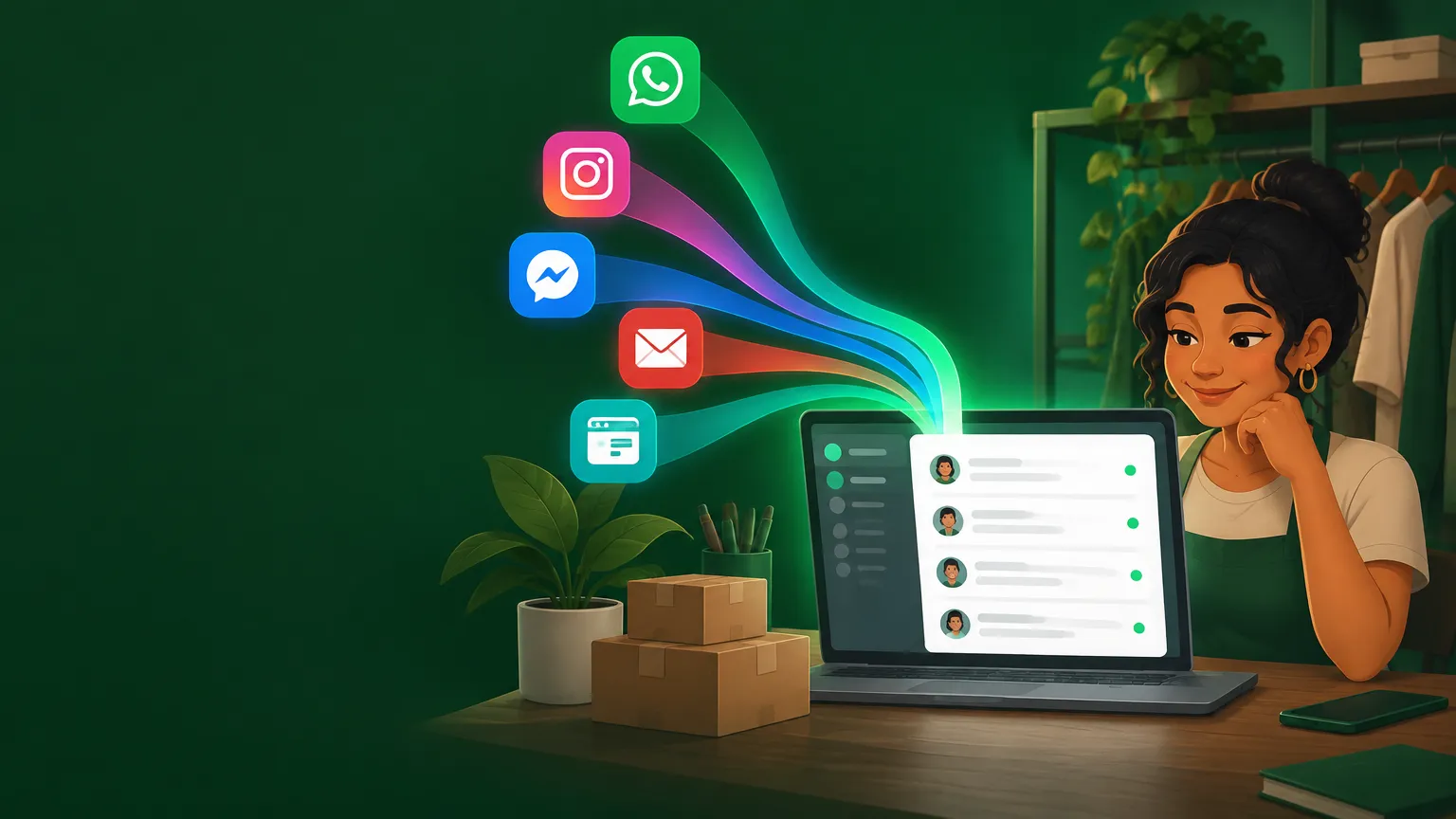
WhatsApp, Instagram, Messenger, chat do site e e-mail no mesmo contexto.
Tarefas, responsáveis, prazos, aprovações, agenda e capacidade.
Contas, cobranças, caixa, fiscal, margem, IR, orçamento e inteligência econômica.
Planejar, produzir, aprovar, publicar e medir conteúdo e campanhas.
Painéis, alertas, previsões, recomendações e leitura executiva.
Rotinas executadas continuamente pela IA com controle e aprovação.
Diagnóstico, estratégia, transformação, acompanhamento e especialistas.
A Centriu faz sentido quando o volume aumenta e a estrutura precisa acompanhar. Não é sobre setor nem tamanho: é sobre a operação conseguir sustentar o próximo estágio.
As vendas crescem, mas o processo não acompanha.
As áreas trabalham separadas e o cliente sente.
A operação depende de pessoas específicas.
O financeiro ficou complexo e o caixa perde visibilidade.
O atendimento cresce em volume e em canais.
A IA entra sem contexto, controle ou histórico.
Se a empresa ainda não começou a crescer, a Centriu também ajuda a preparar a estrutura para o primeiro salto.
Ver a Centriu funcionandoA Centriu combina tecnologia, inteligência, método e acompanhamento. A consultoria diagnostica, desenha, implanta e acompanha — com evidências, não com apresentação.
Diagnóstico e imersão na operação
Estratégia e prioridades
Roadmap de transformação
Desenho da arquitetura operacional
Implantação conduzida
Acompanhamento com evidências
Benchmarking e leitura de mercado
Especialistas, rede e inteligência coletiva
Uma conversa para entender onde a sua operação perde tempo, dinheiro ou capacidade — e o que a Centriu faria primeiro.
problema
Competitor and ad monitoring automation, through Centriu Atlas, sets up a "Watch" against a competitor once. It runs on a daily or weekly schedule. A scheduled sweep checks it automatically from then on. This is better than a team member manually revisiting a competitor's page every so often. Sources include the ones available without a private API connection: Meta's public Ad Library, LinkedIn's organic posts, Google's Ads Transparency Center (searchable by domain), and Google Trends. This is a deliberate design choice. Meta only gives an authenticated connection to specific partners, not to individual customers. When a previously-seen ad disappears from a competitor's active set, that absence becomes a signal. It shows that "this creative stopped working". A team would otherwise never notice this. On top of the raw creative, an AI pass produces a structural breakdown of what makes a specific ad work. This includes its hook, its promise, its proof, its call-to-action, and its visual hierarchy. There is an explicit rule never to suggest copying the exact artwork, copy or brand elements. Only the underlying structure is shared.
Checking a competitor's ads or posts "when someone remembers to" means the check happens irregularly. It happens at whatever routine a busy team can manage. In practice, this means most changes are missed entirely. The ones that are caught are caught late. A genuinely useful competitive watch needs to run on its own schedule. It should be independent of whether anyone thought of it that day.
Checking a competitor's ads or posts "when someone remembers to" means the check happens irregularly. It happens at whatever routine a busy team can manage. In practice, this means most changes are missed entirely. The ones that are caught are caught late. A genuinely useful competitive watch needs to run on its own schedule. It should be independent of whether anyone thought of it that day.
A team creates a "Watch" against a specific competitor. This can be by domain, brand name or LinkedIn page, depending on the source. They set it to run daily or weekly. A scheduled sweep runs once a day. It works through the organization's active watches. It is capped at 40 processed per run. There is a short pause between each call to stay within the source platforms' own rate limits. It pulls the current state from Meta Ad Library, Google Ads Transparency Center, LinkedIn's organic feed, or Google Trends. This depends on what the watch is configured to track.
Each sweep compares the current result against what was seen last time. A new ad or post is recorded as newly discovered. An ad that was active before but is no longer showing is marked as having disappeared. This is treated as a meaningful signal on its own. A competitor rarely keeps running a losing creative. For a specific ad or post a team wants to understand more deeply, an AI pass reads both the copy and the creative image. It returns a structured breakdown. This includes what the hook is, what promise is being made, what proof backs it up, what the call-to-action asks for, and how the visual hierarchy guides attention. It is always framed as the STRUCTURE behind why something works. There is an explicit rule that the output never suggests copying the exact artwork, copy or brand elements.
Scheduled "Watches" against a competitor, configurable to run daily or weekly, without manual re-checking.
Multi-source coverage: Meta Ad Library (public, no OAuth), LinkedIn organic posts, Google Ads Transparency Center (by domain), and Google Trends.
A daily automated sweep, capped and rate-limited to respect the source platforms' own limits, rather than an unthrottled scraper.
Automatic detection of ads that disappeared since the last sweep. This is surfaced as a "this stopped running" signal.
AI structural analysis of a specific ad or post: hook, promise, proof, call-to-action and visual hierarchy. There is never a suggestion to copy the exact art, copy or brand.
A dedicated blocked/limited state in the interface when a source platform's own rate limit is hit. This is better than silently failing or showing stale data as current.
A competitive check that used to depend on someone remembering to look now runs on its own schedule. A signal as easy to miss as "this ad quietly stopped" gets surfaced automatically. This is better than going unnoticed. The structural breakdown turns "that ad looks like it's working" into a specific, nameable reason a team can actually act on.
A competitive check that used to depend on someone remembering to look now runs on its own schedule. A signal as easy to miss as "this ad quietly stopped" gets surfaced automatically. This is better than going unnoticed. The structural breakdown turns "that ad looks like it's working" into a specific, nameable reason a team can actually act on.
An agency sets up a weekly Watch against a competitor's domain and Meta page. Three weeks in, the sweep flags two things. It finds a new ad that just started running. It also finds an older ad. This is one the account had watched for over a month. It disappeared from the active set since the last check. Curious why the older ad might have stopped, the team runs the structural analysis against a saved copy of it. The breakdown identifies the hook as a specific pain-point question. It identifies the proof as a client-count claim. The call-to-action is a direct "Book a call". This gives the team a specific structural idea to test in their own next campaign. They do this without copying the ad itself.

No — no such access is available to anyone outside that account. Monitoring uses each platform's own public transparency surface (Ad Library, Ads Transparency Center, public organic feed, Google Trends).
Daily or weekly, configurable per Watch. It is not continuous real-time monitoring.
It is flagged as having stopped running. This is treated as a signal worth noticing, not silently dropped.
No — it produces a structural breakdown (hook, promise, proof, CTA, visual hierarchy). There is an explicit rule against suggesting the exact artwork, copy or brand be copied.
Organic LinkedIn coverage here is topic-based search. It is not full profile browsing.
It is sold with tiered plans. These start at a published entry price. Each plan carries a fail-closed AI usage ceiling across a 5-hour session window and a 7-day weekly window. Current prices are on the central pricing page.
Competitor and ad monitoring automation, through Centriu Atlas, sets up a "Watch" against a competitor once. It runs on a daily or weekly schedule. A scheduled sweep checks it automatically from then on. This is better than a team member manually revisiting a competitor's page every so often. Sources include the ones available without a private API connection: Meta's public Ad Library, LinkedIn's organic posts, Google's Ads Transparency Center (searchable by domain), and Google Trends. This is a deliberate design choice. Meta only gives an authenticated connection to specific partners, not to individual customers. When a previously-seen ad disappears from a competitor's active set, that absence becomes a signal. It shows that "this creative stopped working". A team would otherwise never notice this. On top of the raw creative, an AI pass produces a structural breakdown of what makes a specific ad work. This includes its hook, its promise, its proof, its call-to-action, and its visual hierarchy. There is an explicit rule never to suggest copying the exact artwork, copy or brand elements. Only the underlying structure is shared.