
Entende o contexto
Lê a operação, o cliente e o histórico antes de propor qualquer coisa.
Vendas, marketing, atendimento, operação, financeiro e inteligência trabalhando sobre o mesmo contexto — para sua empresa ganhar escala sem perder controle.
Sua empresa inteira. Uma operação. IA trabalhando.
Para empresas de qualquer setor que querem crescer com estrutura, controle e inteligência.
Painel ilustrativo do Sistema Centriu com sete frentes trabalhando: atendimento, comercial, operação, agentes, inteligência, conteúdo e marketing. Cada frente mostra o trabalho concluído ou o próximo passo.
Representação ilustrativa do trabalho em execução
Não é falta de ferramenta. É que cada ferramenta resolve um pedaço, e ninguém é dono do todo. O custo disso não aparece numa fatura — aparece no mês seguinte.
Sistemas que não se falam
O mesmo dado é digitado de novo — e cada cópia conta uma história diferente.
Dados duplicados
Ninguém sabe qual versão é a verdadeira na hora de decidir.
Conversas perdidas
O cliente repete o contexto a cada canal e a cada pessoa.
Tarefas espalhadas
O trabalho vive em planilhas, mensagens e na memória de alguém.
Decisões sem contexto
A escolha é feita com o recorte que estava à mão, não com o que importava.
Automações desconectadas
Cada ferramenta automatiza um pedaço e ninguém enxerga o todo.
Nenhum desses problemas se resolve comprando mais um software. Eles se resolvem quando a operação inteira passa a trabalhar sobre o mesmo contexto.
A Centriu não é uma coleção de produtos. É uma plataforma em que clientes, áreas e agentes leem e escrevem no mesmo lugar.
Cliente 360
Um contexto, não vários cadastros
Cada conversa, tarefa, campanha, cobrança e decisão fica ligada ao cliente e à operação — não a um sistema isolado.
As áreas abaixo são partes da mesma operação, não produtos separados. Elas compartilham conta, permissões e histórico.
A inteligência artificial da Centriu participa da operação: entende contexto, prepara trabalho, executa rotinas e pede aprovação quando importa.
Lê a operação, o cliente e o histórico antes de propor qualquer coisa.
Redige, organiza, calcula e deixa pronto para revisão humana.
Roda o que é repetitivo dentro dos limites definidos pela empresa.
Cruza áreas, identifica prioridade e mostra o motivo da recomendação.
O que é sensível passa por uma pessoa antes de valer. Sem exceção silenciosa.
Registra o que aconteceu e usa o resultado para melhorar a próxima decisão.
Uma plataforma, várias frentes de trabalho. Tudo no mesmo contexto, com a IA participando do que dá para acelerar.
CRM, pipeline, oportunidades, propostas, follow-up e automações.
WhatsApp, Instagram, Messenger, chat do site e e-mail no mesmo contexto.
Tarefas, responsáveis, prazos, aprovações, agenda e capacidade.
Contas, cobranças, caixa, fiscal, margem, IR, orçamento e inteligência econômica.
Planejar, produzir, aprovar, publicar e medir conteúdo e campanhas.
Painéis, alertas, previsões, recomendações e leitura executiva.
Rotinas executadas continuamente pela IA com controle e aprovação.
Diagnóstico, estratégia, transformação, acompanhamento e especialistas.
A Centriu faz sentido quando o volume aumenta e a estrutura precisa acompanhar. Não é sobre setor nem tamanho: é sobre a operação conseguir sustentar o próximo estágio.
As vendas crescem, mas o processo não acompanha.
As áreas trabalham separadas e o cliente sente.
A operação depende de pessoas específicas.
O financeiro ficou complexo e o caixa perde visibilidade.
O atendimento cresce em volume e em canais.
A IA entra sem contexto, controle ou histórico.
Se a empresa ainda não começou a crescer, a Centriu também ajuda a preparar a estrutura para o primeiro salto.
Ver a Centriu funcionandoA Centriu combina tecnologia, inteligência, método e acompanhamento. A consultoria diagnostica, desenha, implanta e acompanha — com evidências, não com apresentação.
Diagnóstico e imersão na operação
Estratégia e prioridades
Roadmap de transformação
Desenho da arquitetura operacional
Implantação conduzida
Acompanhamento com evidências
Benchmarking e leitura de mercado
Especialistas, rede e inteligência coletiva
Uma conversa para entender onde a sua operação perde tempo, dinheiro ou capacidade — e o que a Centriu faria primeiro.
problema
A stack of interview notes and a spreadsheet of survey scores usually sit completely apart from the strategy documents they should be informing. An NPS calculation that quietly includes a respondent who never actually consented inflates a number nobody can defend later. Centriu Oracle structures customer feedback as three linked records. These are a study (interview, survey, NPS, CSAT or free-form, each with its own consent text and response scale), individual responses tied to a pseudonymous alias rather than a real name, and named insights extracted from those responses. Every NPS and CSAT calculation runs only over responses where consent was explicitly given. A response withheld from that calculation is reported as a specific "blocked" count sitting next to the real number. It is never silently folded into a lower average and never silently dropped without a trace. Each insight is then tagged with one of nine fixed kinds (pain, desire, objection, reason to buy, reason lost, and more). It is routed to one of eight specific parts of the engagement — branding, journey, offer, data, plan, reports, portal or general — through a status that only advances from proposed to approved to applied with a person actually deciding each step.
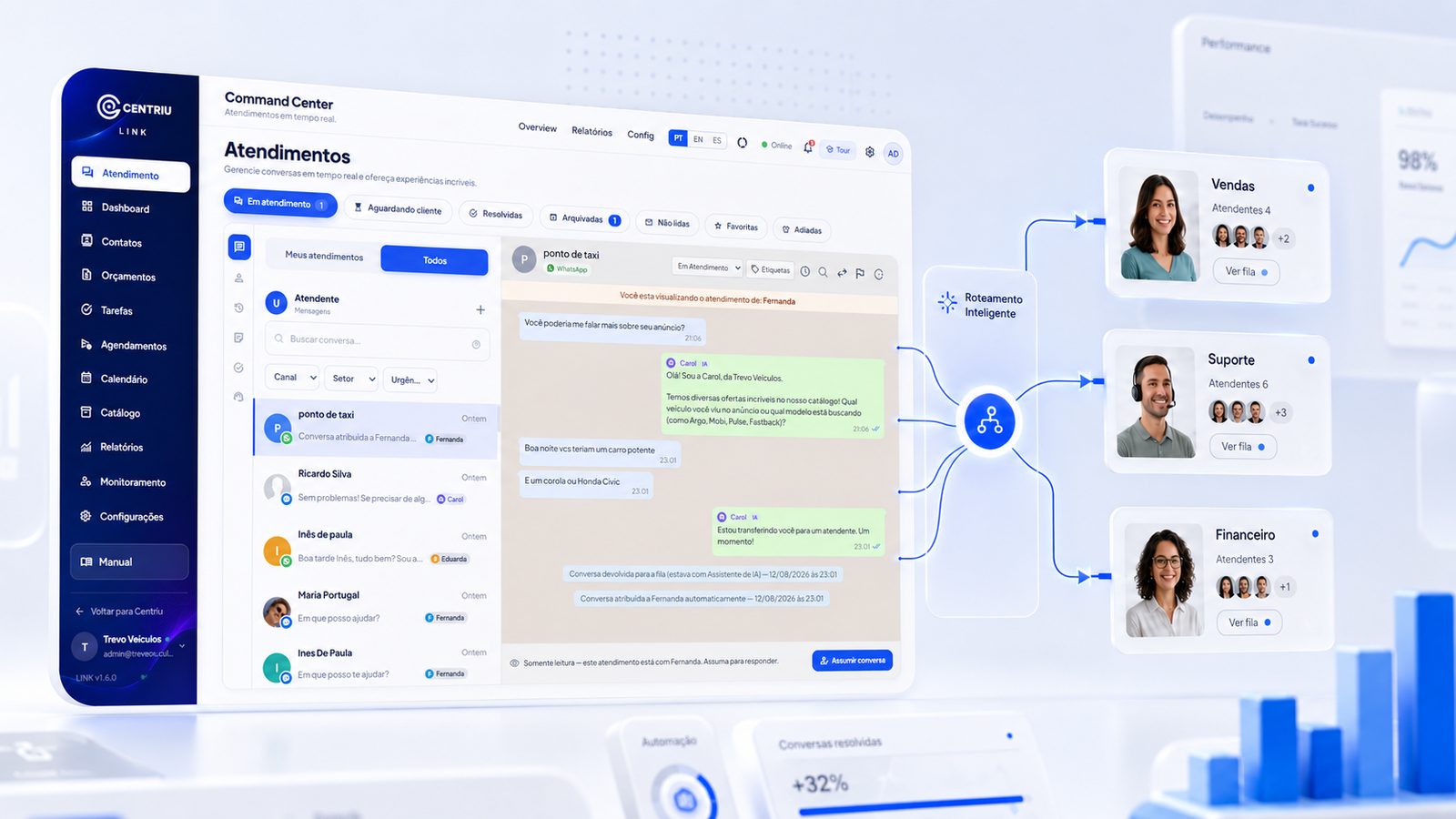
A consulting engagement often collects real customer feedback. This includes interviews, an NPS survey after a launch, or satisfaction scores. Then, it lets it sit in a separate document. This document is disconnected from the branding, journey, and offer decisions the feedback should actually inform. Nobody deliberately ignores the feedback. It simply has nowhere structured to go. A theme that shows up across five interviews stays a vague shared impression among the people who read the transcripts. It does not become a named, trackable item that a specific part of the strategy has to respond to. And when an NPS number does get calculated, it is rarely clear afterward exactly which responses fed it. It is also unclear whether every one of those respondents had actually agreed to be counted.
A consulting engagement often collects real customer feedback. This includes interviews, an NPS survey after a launch, or satisfaction scores. Then, it lets it sit in a separate document. This document is disconnected from the branding, journey, and offer decisions the feedback should actually inform. Nobody deliberately ignores the feedback. It simply has nowhere structured to go. A theme that shows up across five interviews stays a vague shared impression among the people who read the transcripts. It does not become a named, trackable item that a specific part of the strategy has to respond to. And when an NPS number does get calculated, it is rarely clear afterward exactly which responses fed it. It is also unclear whether every one of those respondents had actually agreed to be counted.
Every voice-of-customer effort in a project starts as a study. It is one of five types (interview, survey, NPS, satisfaction/CSAT, or free-form/qualitative). Each has its own free-text objective, audience, question set, and consent text. It also has one of four response scales (NPS 0-10, CSAT 1-5, CES 1-7, or none for purely qualitative work). Individual responses are recorded against a required pseudonymous "respondent alias." The input validation itself instructs "provide a pseudonym, do not use personal data." This is along with the collection source (manual entry, interview, form, phone, email or other), an optional numeric score, open text, notes, and an explicit consent_given boolean captured per response, not once per study. The aggregation logic enforces that consent boundary directly. The summary view filters every study's responses to only those with consent_given before computing anything. It reports the excluded count as a distinct "blocked" figure sitting next to the real total. An NPS calculation counts only consented promoters (score 9-10), passives (7-8) and detractors (0-6) using the standard (promoters minus detractors, divided by total) formula. A CSAT calculation counts only consented scores toward the mean and the percentage scoring 4 or higher. A response withheld from consent is never treated as a zero and never silently vanishes. It is counted, visibly, as blocked. Separately, an insight is a named finding. It is a theme, one of nine fixed kinds (pain, desire, objection, reason to buy, reason lost, reason to renew, reason to cancel, real customer language, or general theme), a description, supporting evidence, and a target area. This target area chooses exactly which part of the engagement it should inform: branding, journey, offer, data, plan, reports, portal, or general. An insight optionally links back to the specific study it came from. It moves through an explicit four-stage status — proposed, approved, applied, or discarded. This means a raw idea, a vetted finding and an already-acted-on change are never presented as the same thing.
Five study types (interview, survey, NPS, CSAT/satisfaction, free-form) and four response scales (NPS 0-10, CSAT 1-5, CES 1-7, qualitative-only). Each study carries its own objective, audience, question set and consent text.
A required pseudonymous respondent alias on every response. The field's own validation message instructs against using personal data. Plus a per-response, explicit consent_given flag.
NPS and CSAT aggregation that filters to consented responses only, before computing anything. It reports the excluded count as a distinct, visible "blocked" number rather than a silent omission.
A standard NPS formula (promoters minus detractors, divided by total consented respondents) and a standard CSAT formula (mean score plus percentage scoring 4 or higher out of 5). Both are computed identically every time.
Nine fixed insight kinds (pain, desire, objection, reason to buy/lost/renew/cancel, real customer language, general theme). And eight fixed target areas an insight can be routed to (branding, journey, offer, data, plan, reports, portal, general).
A four-stage insight status (proposed, approved, applied, discarded). This means a raw idea is never presented with the same authority as an already-approved or already-applied finding.
Zero public, unauthenticated collection route. Every voice-of-customer page lives under the authenticated project workspace. The consultant records feedback gathered through other channels rather than the tool hosting a public self-serve survey link.
A reported NPS or CSAT number becomes defensible after the fact. This is because exactly which responses fed it — and exactly how many were excluded and why — is visible rather than assumed. A theme repeated across several customers stops being a private impression among whoever read the transcripts. It becomes a named, evidenced, trackable item pointed at one specific part of the engagement. And a respondent's feedback is captured under a pseudonym by construction. It is not an afterthought someone has to remember to redact later.
A reported NPS or CSAT number becomes defensible after the fact. This is because exactly which responses fed it — and exactly how many were excluded and why — is visible rather than assumed. A theme repeated across several customers stops being a private impression among whoever read the transcripts. It becomes a named, evidenced, trackable item pointed at one specific part of the engagement. And a respondent's feedback is captured under a pseudonym by construction. It is not an afterthought someone has to remember to redact later.
A consultant sets up an NPS study for a client three months after a product relaunch. The scale is set to NPS 0-10. A consent text describes exactly how responses will be used internally. Fourteen responses come in through a mix of phone calls and a shared form. Twelve include explicit consent. Two do not. One respondent answered quickly without being read the consent text. The other declined when asked directly.
The summary reports an NPS of 25 computed strictly from the twelve consented responses. "14 respondents (2 blocked)" is shown alongside it. The two non-consented answers are visible as excluded. They are not silently missing and not dragging the score down as if they were automatic detractors. Reading through the twelve open-text responses, the consultant notices three separate promoters independently mention slow order tracking as a minor gripe despite their high scores. That pattern becomes a new insight. It is of kind "general theme," target area "journey," confidence "medium." The three response quotes are attached as evidence. The insight sits as "proposed" until the strategist reviewing the engagement approves it. Later, they mark it "applied" once the journey map is actually updated to address the tracking gap.
No. The aggregation filters to only responses with consent_given before calculating anything. Non-consented responses are excluded from the score. They are shown separately as a "blocked" count. They are never treated as a zero.
No. Every voice-of-customer route is inside the authenticated project workspace. The consultant records responses gathered through other channels (calls, interviews, third-party forms). There is no public, self-serve collection link.
A required pseudonym is entered for every response instead of the respondent's real name. The field's own validation message instructs the person entering it not to use personal data.
It is recorded as an insight with a theme. It has one of nine fixed kinds. It has a target area (one of eight parts of the engagement). And it has a status that only advances from proposed to approved to applied through a person's own decision at each step.
No. There is no AI-assisted step in this feature. Every insight's theme, kind, description, evidence and target area is entered directly by the consultant.
Five: interview, survey, NPS, satisfaction (CSAT), and free-form/qualitative. Each has its own consent text, question set and response scale (NPS 0-10, CSAT 1-5, CES 1-7, or none).
It is sold by subscription with a published starting price. Exact current values are on the central pricing page.
A stack of interview notes and a spreadsheet of survey scores usually sit completely apart from the strategy documents they should be informing. An NPS calculation that quietly includes a respondent who never actually consented inflates a number nobody can defend later. Centriu Oracle structures customer feedback as three linked records. These are a study (interview, survey, NPS, CSAT or free-form, each with its own consent text and response scale), individual responses tied to a pseudonymous alias rather than a real name, and named insights extracted from those responses. Every NPS and CSAT calculation runs only over responses where consent was explicitly given. A response withheld from that calculation is reported as a specific "blocked" count sitting next to the real number. It is never silently folded into a lower average and never silently dropped without a trace. Each insight is then tagged with one of nine fixed kinds (pain, desire, objection, reason to buy, reason lost, and more). It is routed to one of eight specific parts of the engagement — branding, journey, offer, data, plan, reports, portal or general — through a status that only advances from proposed to approved to applied with a person actually deciding each step.