White-Label Client Dashboard Portal Automation for Agencies: Reports That Arrive Under Your Own Name
Why building the dashboard is not the same as delivering it
A marketing agency can build an accurate, well-organized dashboard and still lose most of the value of that work at the delivery step — exporting screenshots into a slide deck, emailing a static PDF that is stale the moment new data lands, or sharing a link that visibly says "Centriu" instead of the agency’s own name. The client-facing delivery of a dashboard is a genuinely separate problem from building it, and Centriu Dash’s portal is built specifically to solve that second half.
How the underlying problem shows up before you fix it
Every reporting cycle involves manually exporting dashboard screenshots into a slide deck instead of sharing the live view.
A shared report link carries the software vendor’s branding instead of the agency’s own name, undermining the agency’s own client relationship.
There is no way to tell whether a client actually opened the last report that was sent, or when.
A link shared with one client stays live indefinitely, with no way to set an expiration or revoke it once the engagement ends.
Sharing a dashboard with a specific client means manually assembling which widgets or reports are relevant to just that one account.
Why this keeps happening without a purpose-built client portal
A dashboarding tool built around creating and reading data rarely gives equal attention to the delivery step — sharing it out, branded, to someone outside the organization. Without a portal built for that specific job, an agency defaults to whatever generic export or link-sharing the tool happens to offer, which usually means the vendor’s own branding, no expiration control, and no way to know whether the client actually looked at it.
How Centriu Dash’s portal delivers a branded, controlled view
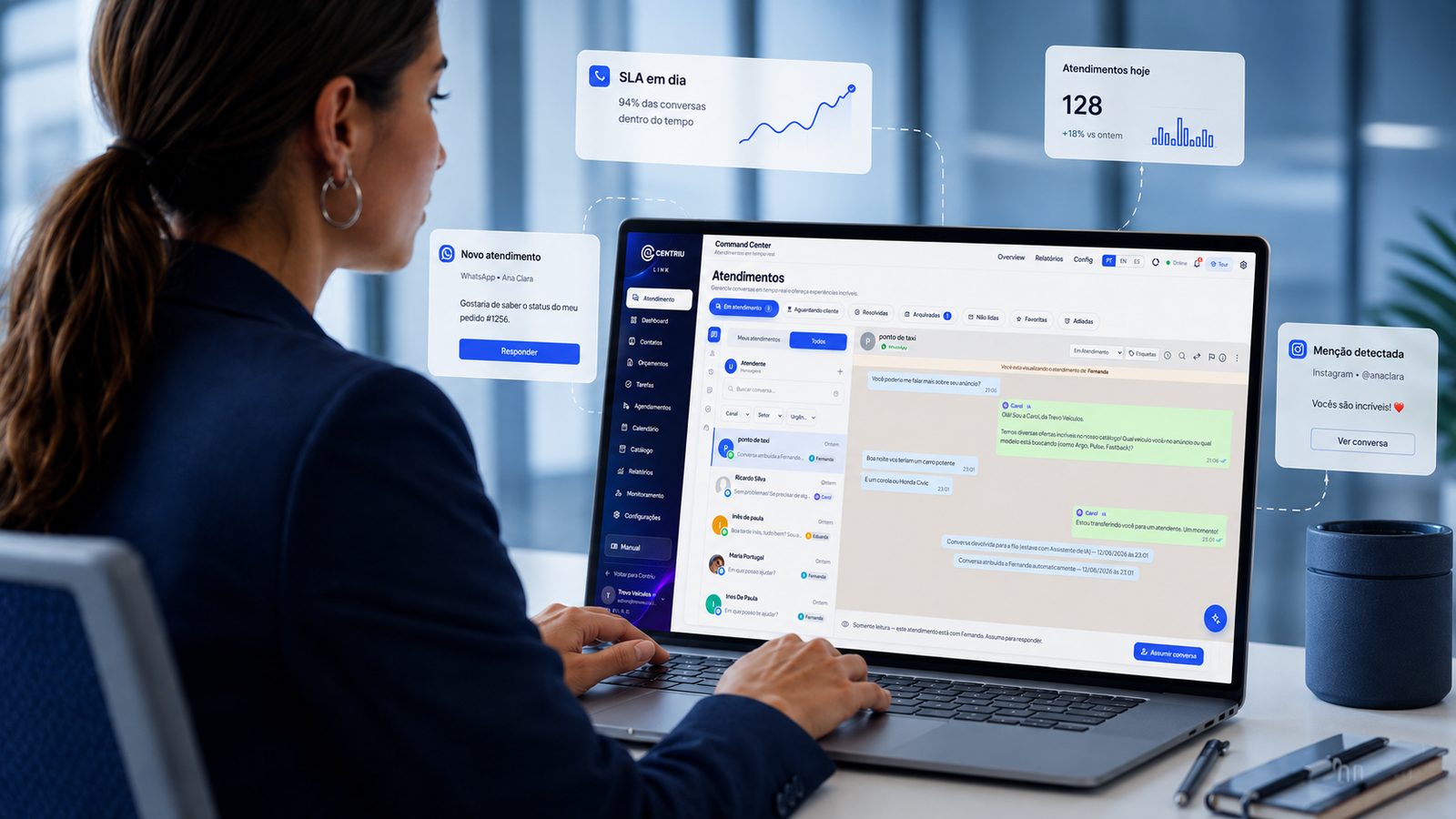
An agency using Dash can assemble a client-specific collection — a dashboard, a report, or a presentation view — and share it through a portal link that carries the agency’s own public name, logo and color branding, not Centriu’s. That link can require a password before it opens, carry an expiration date after which it stops working, and be revoked outright at any point, independent of the expiration date. Every time the client opens it, an access log records the view — the agency can see whether and when a report was actually opened, not just that it was sent.
What is actually built today
Portal links branded with the agency’s own public name, logo and colors, not Centriu’s.
An optional password requirement on a shared link.
An expiration date on a shared link, after which it stops granting access.
Revocation of a shared link at any time, independent of its expiration date.
An access log recording when a shared link was actually opened.
Shareable collections spanning a dashboard, a report, or a presentation view.
An agency preparing a monthly client report (illustrative scenario, not a real client)
Instead of exporting screenshots into a slide deck, the account manager assembles the client’s relevant widgets into a collection inside Dash and generates a portal share link — branded with the agency’s own logo and name, with no visible mention of the underlying software.
The link is set to expire in 30 days and requires a password, which is shared with the client separately. When the client opens it that afternoon, the access log records exactly when.
At the end of the reporting cycle, the account manager can see in the log that the client opened the report only once and a full two weeks after it was sent — a real signal about how engaged the client actually is with the numbers, information that simply did not exist when reports went out as static exports.
What changes operationally
The structural change is a client-facing delivery that carries the agency’s own brand, can be time-limited and revoked, and produces a real record of whether it was actually viewed — replacing a manual export-and-email cycle with a controlled, trackable link. What that is worth in time saved per reporting cycle depends heavily on an agency’s own client count and current process — Centriu does not attach a specific figure that would generalize.
When this is not the right fit
An agency that only ever presents dashboards live on a call, with no need for an asynchronous shareable link between meetings, may see less specific value from the portal’s sharing mechanism specifically.
Manual export vs. a branded, controlled, trackable link
Exporting screenshots into a slide deck every cycle is manual work that goes stale the moment new data lands, and a link carrying the vendor’s own branding undercuts the agency’s own client relationship. Centriu Dash’s portal replaces both with a live, agency-branded link that can be password-protected, time-limited, revoked, and tracked by an access log — so the agency knows not just that a report was sent, but whether it was actually opened.
Related systems
Main system: Centriu Dash.
What it does NOT do
- Does not support a fully custom domain for the portal — sharing happens through Centriu’s own portal address, branded with the agency’s name, logo and colors, not a domain the agency owns.
- Does not update a client automatically when new data lands — a person still decides when to share or refresh a given link.
- Does not guarantee a client will actually open a shared report — it tracks whether they did, through the access log, but does not compel engagement.
- Does not merge portal or client data across different agencies using Dash — each account only sees its own collections and access logs.
Security and governance
Each agency using Centriu Dash only sees its own dashboards, collections and access logs — nothing is shared across accounts. Client data referenced in a shared report follows Brazil’s LGPD (Law No. 13,709/2018). Full detail on access control and audit trails lives at /governanca and /iso.
Pricing and contracting
Available by monthly subscription, with tiered plans. Values and terms come from the official pricing table at /precos (Centriu's central source — never restated here).
Frequently asked questions
Does a shared portal link show Centriu’s branding or the agency’s own?
The agency’s own — public name, logo and colors, not Centriu’s.
Can a shared link be protected by a password?
Yes — an optional password requirement is available on a shared link.
Can a shared link expire or be revoked?
Both — it can carry an expiration date, and it can also be revoked outright at any point, independent of that date.
Can the agency tell whether a client actually opened a report?
Yes — an access log records when a shared link was opened.
Can the portal use the agency’s own custom domain?
No — sharing happens through Centriu’s own portal address, branded with the agency’s identity rather than a domain the agency owns.
What does Centriu Dash cost?
It is sold by subscription with a published starting price — exact current values are on the central pricing page.
See how Centriu Dash’s client portal works for agencies
Reach our commercial team directly, or leave your details below — we'll follow up with guidance for your case.